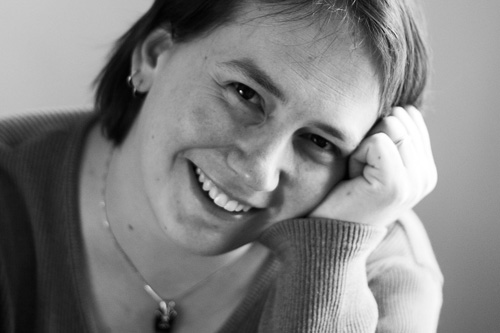
I haven’t done much genealogical research lately. What I have been doing is changing my life situation from being a stay-at-home mom to having a full-time out-of-the-house job. So I have not had very much to write about lately.
However, I have been journaling a lot lately. These changes have brought up a lot of things for me to sort through. I have found journaling helpful in the past and have kept a semi-consistent journal for 12 years now (...good grief, has it really been that long?)
Keeping a journal is therapeutic. I can put on paper the things that are bothering me and get them out of my head. If there has been some sort of an event that I don’t understand or that is upsetting, I can write about it and then sleep well at night because it’s no longer churning in my mind. I also use my journal when things are going well and I want to remember how good I am feeling about something.
Journals are especially good for writing down special events, such as things my kids have accomplished, or a memorable trip, or a visit with someone. Writing down your thoughts, experiences, hopes, memories, and frustrations can be an excellent way of breaking your writer’s block. It can be a starting point for larger pieces. A journal can be a little snapshot or a preview of a larger article. I often go back to my journal for an article idea.
A journal will also be a treasure for a great-grandchild to read someday. Or they may be confused if they read my journals, I don’t know.
Here’s an excerpt from 3 October 1996 when I was still in college studying art: “I’m really looking forward to graduation. Only 7 more months then I’ll be able to do what I want to do…” And this one from 10 April 1997: “I’m going to name my next cat Gunther.” But also I wrote on 27 October 1997: “Two weeks ago we went to Abilene, KS for Seth’s grandpa’s 80th birthday. It was a surprise party. It was very fun. He was definitely surprised! It was also neat to meet some of Seth’s family that I hadn’t met yet…”
So I’ve written about my thoughts for the future, ideas about cat-naming, and about a special event related to an ancestor. These items are fun for me to read and will be even more fun for my descendants.
I don’t know about you, but it seems that my ancestors never wrote anything down. I don’t even have a letter, a Bible record or a grocery list from one of my ancestors. Oh how I wish just one person had kept a journal! I long to read about their thoughts, ideas, hopes for the future, what their kids were doing, their struggles in parenthood, in life. I would love to be swept away with visions of pioneer life of my ancestors, of the hazards of working on a farm, of falling in love and getting married.
It is one thing to learn about our ancestors, find the names and dates and fill in a chart. We can even flesh out some of their lives and personalities through extensive research, but we won’t ever know what they were really thinking and living if we don’t have any written accounts of their own... Thoughts and ideas right from their own heads and left on paper for the rest of us to find and read.
I have talked to my kids about keeping journals of their own. Even 7-year-old Ethan writes in one once in a while! They are still young. Ethan only learned to read and write last year. However, I’m planting the seeds in their mind that a journal is a good idea and therefore might be something they do in their future.
I think it is probably too late for me to find any journals or letters from my ancestors. I have asked just about every living relative I know if they know of any and the answer is always “no.” However, I can leave a journal for my kids and grandchildren and great-grandchildren to puzzle over after I’ve left this earth. More importantly are the benefits I gain from journaling right now while I’m still alive: mental health and writing ideas.
Showing posts with label family memory. Show all posts
Showing posts with label family memory. Show all posts
Monday, May 12, 2008


Tuesday, February 12, 2008
The First Word #9: The Story of a Summer Home, Nederland, Colorado
My husband Seth’s grandparents were known throughout the family for their summer home in Nederland, Colorado, commonly referred to as “the Cabin.” When I became part of the family I heard stories and was shown pictures of events at the Cabin. It was a place where the whole family came together and created a lot of happy memories.
Seth’s grandfather, Paul Furbeck, wanted a home in the mountains. He and his wife Margaret lived in Abilene, Kansas––it is a good eight or nine hour drive from Abilene to Nederland. One of their daughters was living in Evergreen, Colorado, so in 1976 she began scouting the area for land that they could consider buying. She found a 1.8 acre lot on the southern side of Nederland for about $7500. For Grandpa, the view sold it. The Cabin would have a perfect view of the town below and the Indian Peaks to the North.
Grandpa wanted to build the house from scratch. He was always interested in working with his hands and this would be no exception. He bought the house from a company called Capp Homes who sold houses in kits. Capp had a crew come to the lot and build the framing for the foundation. The family helped out and then built the rest of the house.
The foundation and basement was poured in 1977. They lived in a camper during the time they were there until the house was in a livable condition. They were able to begin living in the Cabin about the end of the summer of 1978.
When they first built the home, they would come to Colorado at the end of May, after school let out for the year, because Grandma was a school teacher. They would return to Abilene before school was back in session for the fall. After they retired, they stayed longer. One year they didn’t leave until after Thanksgiving. During that trip they discovered how the snow would get packed thick on the county road and that their driveway would develop a terrible drift in the winter that soon became impassable. They would have to park the car at the top of the driveway and walk down to the Cabin through the trees, creating a trail.
I remember times visiting my husband’s grandparents at the Cabin. They would be out in Colorado for a few weeks in the summer and we’d go visit. Seth’s grandma liked to take drives in the mountains––we’d just get in the car and see where we ended up. One day we drove up to Caribou, a ghost town, and had a picnic. Once we drove down Magnolia Road, a very steep and narrow road, where she picked up a hitchhiker who needed a ride to the highway to catch the bus. (I never would have imagined Grandma picking up a hitchhiker!) Another time we drove through Ward and down the mountain the “back way” into Boulder.
As they grew older, they were able to stay less and less. Four months gradually turned into two, then just a few weeks. Eventually the house was empty for most of the year except for the occasional visit by an aunt or cousin who was out for a ski trip. The last summer they came to visit their summer home was 2001. At that point, Seth and I were living there with our son Ethan.
In 1999, we were living in Aurora when Seth got a job in Boulder. We decided it was time to move closer to his job. This was just about the time when the grandparents had only been able to come to their summer home for a few weeks each summer and the drive was getting longer and harder for them to make. We needed a place to live, they needed someone to take care of their house. It was a perfect fit! We moved into the Cabin in March 2000. Ethan was born in December 2000 and his first home was that Nederland, Colorado mountain home. It is a beautiful house in a beautiful town.
The house is still owned by Seth’s grandma. When Seth got a new job in Longmont and we had our second child, Ellie, we felt the need to move to Longmont and purchase our own home. Now the Cabin is being rented, by the same couple for the last 5 years. They love it and take great care of the house.
That house has blessed this family with so many wonderful memories––pictures of various grandchildren visiting, an old pile of walking sticks collected in the woods. It stands for so many experiences and is a family treasure. Not as small as a family bible or photo album, but a house can be a genealogical treasure too. Built by the hands of the family, it holds a lot of spirit within its walls.
Tuesday, July 24, 2007
First Word #7 - How I'm Related to Roy Rogers and How I'm Not
I am related to Roy Rogers. I was practically born with this knowledge. It is a part of who my family is, part of how we define ourselves. Ever since I was a little kid, I was told about this fact. I have often heard stories about “Cousin Roy” who moved from Ohio to California and I have even watched some of his movies. Any time he was in the news or mentioned on TV my relatives would say “There’s cousin Roy.” It often came up in conversations with our friends. “Hey, we’re related to Roy Rogers!” The usual response being something like “Who’s Roy Rogers?” This bit of information is what got me to actually begin researching my family history. I wanted to know how we were related. (You notice I didn’t say “if.”)
We’ve all heard these claims and rumors when researching our families. If you share a surname with someone famous, chances are it’s been postulated, if not claimed as true, that you’re related. It is such a common phenomenon that genealogists even make jokes about it.
I wanted to know how exactly how I was related to Roy Rogers, I was bored and had access to a high speed internet connection before such access was common. I had grown up knowing that his name was not Roy Rogers, but Leonard Slye. My mom’s mother was Helen Sly. (Therefore, we are related!)
From doing some basic Internet research and accessing the census, I determined that Leonard Slye was born 5 November 1911 in Cincinnati, Hamilton County, Ohio.1 His family owned a farm in Duck Run, Ohio where he lived and worked until about 1929. His line has been traced back to colonial Maryland.2 I have also seen some charts showing this Slye line back to Warwickshire, England.
My late grandmother Helen Francis Sly (no ‘e’ on the end) was born in Rudolph, Wood County, Ohio, 10 April 1914. I have researched her Sly line in the U.S. back to the late 1840s or early 1850s when they immigrated from Wiltshire, England. It’s the old story of three brothers in England, two of whom came to America, James and William Sly. I believe I have found them on ships’ lists but haven’t confirmed it. The Slys are found in the 1841 Wiltshire census3, then are found in Sandusky County, Ohio in 1856 when James Sly was married in Erie County.4 The other brother, William, was married in 1858 in Huron County, Ohio.5
I have found no connection between my line and the Slyes in Hamilton County. One obvious difference, but not the most important, is the spelling with and without the ‘e’. Also, Wood County is in the northwest corner of the state, near Michigan and Indiana, while Hamilton County is in the southwest corner of the state on the Kentucky and Indiana borders. Geographically, these two lines were not close. I have traced almost all of the descendants of my Sly line from William and James and have found none that have had connections to the Slyes in Hamilton County.
I had to go and spoil all the fun for my family with the pesky truth. Maybe it’s OK sometimes for a family to have a myth to talk about. There’s some history to that in and of itself. My brother now has conversations with people along the lines of “We used to be related to Roy Rogers, but my sister had to go and ruin that!” So I’ve sort of gotten a reputation as the “Confounder of Fantasy” or the “Assassin of Overstatement.” Honestly, I’m also saddened that I have debunked this myth in our family. It was a part of how we defined ourselves. My heart breaks a little because I can tell my family misses being “related” to Roy Rogers. It’s like I popped someone’s balloon just to hear it pop. Don’t get me wrong, I am interested in proof and finding out the truth just like the next dedicated genealogist. But maybe I don’t have to burst bubbles just to highlight my skills. Roy Rogers will always be a part of my family’s history and in that way we are related to him.
The next myth I’m going to tackle is that we are “direct descendants of William Henry Harrison.” My other grandmother’s grandmother’s maiden name was Harrison. Maybe I won’t share my conclusions with them this time.
------------
1. “Roy Rogers Tribute” on the Womack Family News website: http://www.womacknet.net/features/royrogers/roy.htm. Viewed 6 June 2007.
2. Research of Viettia Newcomb, of Ukiah, UT. Pedigree charts sent to author August 2000.
3. James Sly household, 1841 Census returns of England and Wales, Wiltshire, Heytesbury Hundred (Warminster), Horninsham Parish, Piece #1177. FHL film 464196.
4. Erie County Marriage Records volume 2, page 183, Probate Court, Sandusky, Ohio. (Marriage of James Sly and Catherine R[einner?])
5. Huron County Record of Marriages, page 180, Court of Common Pleas, Probate Division, Norwalk, Ohio. (Marriage of William Sly and Harriet Callin)
Saturday, June 23, 2007
First Word #4 - Losing at Euchre to Win at Genealogy
The First Word: Losing at Euchre to Win at Genealogy
by Cari A. Taplin
by Cari A. Taplin
I had the privilege of having my grandma, her sister-in-law Helen “Pinky” Dimick, and her long time friend Wilma Jimison visit my family here in Colorado in February 2006. This was a big deal for several reasons, mainly because they are getting older and because they came all the way from Ohio. The three of them are widowed now and decided to go on an adventure together. I was so excited that they were coming to my house! It is usually the other way around, unless it’s a monumental occasion like a wedding.
First they flew to California where they spent a week visiting my grandma’s sisters, Barb and Elaine, who have lived in California since about the 1940s. Then they flew from California to Colorado. We took a few drives to see the mountains, ate a lot of food, played a lot of Euchre, and did a lot of talking. Since I had the three of them together at my table a lot during those few days, I took the opportunity to ask them about life during the Great Depression in rural northwest Ohio.
All three of them agreed that they didn’t notice the depression much. It didn’t really affect their way of life. The land in Wood County, Ohio is largely made of clay, and was not susceptible the dust bowl effects that occurred in other parts of the county. They all lived on farms that were mainly self-sustaining. They do not recall having many struggles. They just figured out how to live with what they had.
All three of them were school-aged during the Depression. All three of them remembered that they had a “school dress,” usually just one that they would have to change out of when they got home to save it for the next day. They received a lot of hand-me-downs for their clothes and they remember hand-making the blankets they used.
There were big gardens on their farms; all of their food was grown at home. They canned everything to stock up for the winter. They also raised cows and pigs for meat. My grandma remembers her grandmother, Martha (Meeker) Dimick raising chickens for eggs and meat. She also had an uncle, Gerald Dimick, who owned an apple orchard in Wood County.
On Saturdays my grandmother’s mother, Martha (Urban) Dimick, would get groceries in town. These consisted of things such as sugar, salt, and other things they could not make or grow on their farm. The kids would get candy and ice cream as a treat. Saturdays they had spaghetti for dinner, and Martha would usually invite someone over for dinner, typically someone from church.
They heated the house using gas but during the coldest nights, they would heat glass jars filled with water, wrap them in paper, then use them to keep their feet warm in bed. There were times when they were uncomfortable, but they didn’t seem to have too many troubles on the farms in northwest Ohio.
One thing they all agreed on was that they played a lot of cards growing up. And that is something that is still true in my family. Every time we visit we play a lot of cards. I can remember the adults playing Euchre ever since I was very small. It was one of my grandpa’s favorite pastimes. Besides being fun, it is free. I felt like one of the grown-ups when I finally understood Euchre enough to play it! I’ll never be as good at it as Wilma or my grandpa, but it is still fun nonetheless and it always opens the door to some great conversations which will enrich my genealogy for future generations’ enjoyment. If you don’t play Euchre, it’s not too late to learn. It’s for genealogy’s sake after all!
First Word #3 - Ask Grandma First
The First Word:
Ask Grandma First
by Cari A. Taplin
Ask Grandma First
by Cari A. Taplin
We all know that the first rule of genealogy is to TALK TO YOUR RELATIVES. The second rule of genealogy is to TALK TO YOUR RELATIVES. Every beginning genealogy book, article or class will tell you to first to TALK TO YOUR RELATIVES.
How do you know what to ask? How do you know what information Grandma has in her head? I can never guess what my grandma is going to reveal to me next! I can ask her a question directly about her family and she won’t know the answer. Then she’ll tell me some obscure item about great aunt Betty she’s only met one time 60 years ago–someone I would never have thought to ask her about. If some one has an easier way to figure this out, please let me know. But I digress. . .
I want to share an experience that happened to me this summer. My family and I took a rather long vacation–two weeks in Ohio and another week in Kansas. My main area of research is in northwestern Ohio. Every time we go back, I spend at least a day or two at area libraries seeking and finding more information. And of course, I spend time asking Grandma questions.
This summer I discovered that the public library in Perrysburg, Ohio had just acquired copies of the records of Zoar Lutheran Church covering 1859 through 1930. What luck! My Miller family were all members of Zoar Lutheran Church and had been for as far back as Grandma can remember. This gives me a new source to work with, which is great because I have the wonderful opportunity to research the surname “Miller.” And not just any “Miller” but “unique” names such as William Miller, John Miller, Fred and Mary Miller. (I need to see the cup half full and take this as a way to really hone my genealogical skills, right?)
In researching these newly available church records, I came across a marriage for a possible brother to my ancestor William John Miller, a Fred Miller married to Mary Kopp. I knew from other research that William did indeed have a brother named Fred but I didn’t know much about him. I was excited to find this bit of information but didn’t know exactly how to go about proving that this Fred was my relative. The only bit of information I had on Fred Miller was from William’s obituary which stated that at the time of William’s death his brother Fred lived in Trilby, Ohio.1 It did not mention a wife or any children. I could not tell from the obituary if he had married. I began going over the possible ways to prove the theory in my head. It would involve a lot of work: trips to libraries, time on the internet and so on to connect this Fred and Mary (Kopp) Miller to William Miller.
So the next mental step I took was to locate Trilby. So I asked Grandma “Do you have an atlas I could borrow?” (Not “Do you know where Trilby is?” Duh.) After not finding it on the map my grandma asks me what I’m looking for. So I tell her about William’s obituary and the clue that his brother Fred was in Trilby, Ohio and I was trying to locate it.
Well, her next statement sort of hit me as a “boy, I’m not thinking straight” moment. She said “Oh, you mean Uncle Fred and Aunt Mary.” That clinched it for me. Granted, Fred and Mary Miller are common names, but the fact that they attended this particular small church and Grandma put those names together without my prompting, has led me to believe it is “probably true” that Fred Miller, brother of William, married Mary Kopp. You have some “probably trues” in your own research too, don’t you?
I will be doing other research to verify this, but the “ah-ha” moment of grandma’s simple statement made me realize a few things. First of all, after doing what I consider “serious genealogy” for about 5 years now, I think I’ve gotten tunnel vision. I’ve been doing research in books, newspapers, online and such for so long that I didn’t even think to ask a living, breathing relative. I didn’t even consider it. Genealogy is all about studying dead relatives anyway, right? I should have asked her first if she’d known William’s brother and his wife. Or at the very least I should have asked her if she knew where Trilby was before I broke out the map.
The second and maybe most eye-opening thing I’ve come to realize is that there is no rhyme or reason to the information that people can or cannot remember. You just have to talk to them and find out what knowledge is hidden their heads. Maybe you’ve had similar experiences. Surely it isn’t just me.
1. William J. Miller obituary, The Perrysburg Journal, Perrysburg, Ohio, 29 August 1952, p 1, c 5.
First Word #2 - How Potty Training Can Help Your Genealogy
The First Word:
How Potty Training Can Help Your Genealogy
by Cari A. Taplin
Last summer, my family and I took a trip to visit my extended family in Ohio, driving across the Midwest for two days. On the return trip I had planned to make a couple of genealogical stops in Missouri where I have traced my maternal grandmother’s line. Our first stop was Wellsville, Missouri, which is practically in the middle of the state, not far off of I-70.
After stopping at a local library to look at some old newspapers, I wanted to locate the tombstones of my great-great-great-grandparents, Thomas Carroll and Angeline Mitchell. Thomas Carroll Mitchell died 29 April 1914 and Angeline died 5 March 1913. I had come across a list of tombstone transcriptions several years ago recording their graves, but had never had the time to go and find them. Now I finally had my chance.
I knew the cemetery was located in Wellsville, and prior to our trip I had searched the Internet, located the cemetery on a map, and plotted the course we would take to get there. The surrounding countryside was somewhat hilly and there were small farms everywhere. During the peak of summer, it was a beautiful drive.
Arriving in the small town of Wellsville, population 1400, we passed a gas station and several streets with small houses; there was not much to this town. Finding the cemetery was easy since I had a good map and it was a pretty good-sized cemetery for such a small town.
There were two modern entrances to the cemetery and the remains of what appeared to be the original entrance, a two-wheel rutted path that went under an old metal archway. We took the first drive we came upon which wound through the cemetery in a “U” shape and ended up at the second entrance. There was a shallow gully that bisected the cemetery which was dry when we were there. It appeared that the oldest stones were east of this gully and the newer ones were to the west.
We parked under a nice old shade tree and let the kids out. They had been riding for a long time and needed to stretch their legs. We had a discussion with the children about what to do and not to do in a cemetery, such as where to walk and how to avoid touching the stones lest we knock a loose one over (we’d already had an experience with this when my son was younger, but that’s a whole other topic altogether!)
We started walking up and down the rows, canvassing the stones. This was a great time to practice letters with Ethan, our preschool-age son. I told him to find any tombstones that started with an “M.” We looked and looked and looked. And then we looked some more. There were many stones whose dates and names were so eroded by the elements that they were illegible and I was beginning to think we'd never find my ancestors’ graves.
Seth, my husband and research slave, then realized that the cemetery transcriptions I had brought with me were arranged in order of location, meaning that whoever compiled it probably recorded the list in order as they walked the rows, instead of alphabetizing it. So, next to my Mitchells on this list, there were some common names like Brown but there were also some Branstetters. Being an uncommon name I’d be likely to recognize, I also began looking for “Branstetter.”
I was about half way through the older part of the cemetery when Ethan proudly announced he had to go potty. He had been potty trained for a while now, but when they say they need to go they usually mean five minutes ago. So we thought we'd just have him go on the road next to the car. However he informed us he had to “go poop” and we decided that THAT probably was something to be added to the list of things we don't “do” in a cemetery. Seth quickly loaded him up in the car to drive back to the gas station in town to use the bathroom.
Meanwhile, Ellie, my daughter, and I kept walking the cemetery. We were getting hot and tired. I was about to give up assuming that my ancestors’ stones must have been among those that were completely unreadable. By the time Seth and Ethan returned from the gas station (a false alarm I might add) I was done with the older part of the cemetery. I suggested we give up because we were hot and tired and we just couldn’t find the stone.
By happenstance, Seth had driven back through the second cemetery entrance, which was closer to where we were searching. We loaded up, packed the genealogy away and headed out. Because we were turned around, we had to drive back through the “newer” section of the cemetery to leave. As we rolled through the “newer” section, I noticed a tombstone that looked like it said “Branstetter” in the distance. It was just beyond the little gully next to a few other stones. And then I saw one that said “Mitchell” standing right beside it. As we drew closer, I could clearly see it was my ancestors!
They were even within inches of the road where we drove in. The tombstones were facing the “wrong way,” meaning they were not facing the road as we drove in, so I couldn’t see them even though I was scanning for them. If Ethan hadn’t had to go to the bathroom, I would have never found my ancestors. We would have driven right out of that second entrance and never looked back.
I learned many lessons on that trip. First, look for other names that should be buried near your ancestors. Second, don’t forget to check those tombstones that are facing the “wrong direction.” Third, and definitely the most important, taking along a potty-trained tike can be the key to finding your ancestors.
Subscribe to:
Posts (Atom)