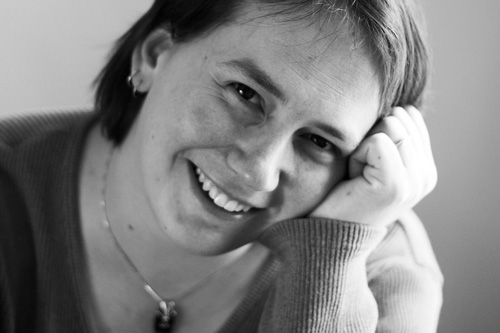
Time is a funny thing. It just slips away and is gone before you know it. I don’t know what happened to the whole month of June for instance. I woke up the other day and my calendar said July 1st and I said, “Holy cow, where did June go?” As I get older, time seems to go by faster. My kids are already growing up, the number of years I’ve been alive is getting bigger at an alarming rate and I swear an hour or two is removed from my day every night while I am sleeping. Surely, there are only twenty-two hours in the day anymore!
I think of the shortness of life when I look how many of my “older” family members are passing away. There aren’t too many left “above” me in the tree any more. My family wasn’t that large to begin with! I only have 4 first cousins to start with! I know many families that have dozens. One of my maternal grandfather’s brothers and sisters died in May, Carl Businger. I remember as a child going to Uncle Carl’s house for a party on the 4th of July, eating watermelon in their back yard, then walking to the golf course nearby to watch the fireworks.
I was never very close to that side of the family. My mother has been semi-estranged from her family and after she moved us to Wyoming, we lost almost all contact with her family. Since my mother lost contact, so did I. When I became an adult and began researching my tree, her parents had already passed away and my already tenuous connections with any of her aunts and uncles had diminished even more.
I find it foolish and unnecessary that families can be broken apart and consequently much family history is lost as a result of one “break in the branch.” I would have loved to have had my grandfather’s siblings’ perspective on so many things. What could they have told me about him? About their upbringing? About their aunts, uncles, cousins? What stories have been lost now because of the grudges and wounded pride that happened before my time?
Stories are lost everyday that will never be pieced together, no matter how much research is done. My paternal grandfather, Karl Miller, was full of such stories. He told me about one time when he was painting a house with a bunch of other guys. One guy was standing on a ladder and his feet just happened to be at the same level as a window into the house. My grandpa took some paint into the house, reached out the window and painted the other man’s shoes! If I asked any number of people who knew my grandfather they would all have a story of his antics! These peeks into his practical joker personality are lost every time someone who knew him passes away. Then all that’s left of him are the names and dates and places that make up so much of the genealogical record.
That’s where part of our jobs as family historians come in. We have an obligation to interview those who are still living. Ask them about those who have already passed away, those who are still alive, and themselves. Videotape the interview or make an audio recording if they will let you. At least write these stories down and share them with your family.
Even in the time since I began writing this article I got an email from an aunt in Ohio letting me know that another member of our family has passed away. Uncle Ivan Stearns was a dedicated genealogist in my family, mainly researching the Businger side, which is my mother’s line. So, my point has been made again in my own family. I never had a chance to talk to Ivan. We had written letters a few times but never had the chance to meet. He’s on “that side” of the family that I’ve been apart from due to “bad blood” so long ago.
Are there similar situations in your family where someone has moved away, lost contact or been otherwise separated because of some fight or other disharmony? I encourage you to attempt to repair any relationships that have become lost or strained. These relationships are important for your genealogy, but more importantly, also for a more satisfying life being connected to your living family tree.
Showing posts with label stories. Show all posts
Showing posts with label stories. Show all posts
Wednesday, January 20, 2010


Tuesday, July 24, 2007
First Word #7 - How I'm Related to Roy Rogers and How I'm Not
I am related to Roy Rogers. I was practically born with this knowledge. It is a part of who my family is, part of how we define ourselves. Ever since I was a little kid, I was told about this fact. I have often heard stories about “Cousin Roy” who moved from Ohio to California and I have even watched some of his movies. Any time he was in the news or mentioned on TV my relatives would say “There’s cousin Roy.” It often came up in conversations with our friends. “Hey, we’re related to Roy Rogers!” The usual response being something like “Who’s Roy Rogers?” This bit of information is what got me to actually begin researching my family history. I wanted to know how we were related. (You notice I didn’t say “if.”)
We’ve all heard these claims and rumors when researching our families. If you share a surname with someone famous, chances are it’s been postulated, if not claimed as true, that you’re related. It is such a common phenomenon that genealogists even make jokes about it.
I wanted to know how exactly how I was related to Roy Rogers, I was bored and had access to a high speed internet connection before such access was common. I had grown up knowing that his name was not Roy Rogers, but Leonard Slye. My mom’s mother was Helen Sly. (Therefore, we are related!)
From doing some basic Internet research and accessing the census, I determined that Leonard Slye was born 5 November 1911 in Cincinnati, Hamilton County, Ohio.1 His family owned a farm in Duck Run, Ohio where he lived and worked until about 1929. His line has been traced back to colonial Maryland.2 I have also seen some charts showing this Slye line back to Warwickshire, England.
My late grandmother Helen Francis Sly (no ‘e’ on the end) was born in Rudolph, Wood County, Ohio, 10 April 1914. I have researched her Sly line in the U.S. back to the late 1840s or early 1850s when they immigrated from Wiltshire, England. It’s the old story of three brothers in England, two of whom came to America, James and William Sly. I believe I have found them on ships’ lists but haven’t confirmed it. The Slys are found in the 1841 Wiltshire census3, then are found in Sandusky County, Ohio in 1856 when James Sly was married in Erie County.4 The other brother, William, was married in 1858 in Huron County, Ohio.5
I have found no connection between my line and the Slyes in Hamilton County. One obvious difference, but not the most important, is the spelling with and without the ‘e’. Also, Wood County is in the northwest corner of the state, near Michigan and Indiana, while Hamilton County is in the southwest corner of the state on the Kentucky and Indiana borders. Geographically, these two lines were not close. I have traced almost all of the descendants of my Sly line from William and James and have found none that have had connections to the Slyes in Hamilton County.
I had to go and spoil all the fun for my family with the pesky truth. Maybe it’s OK sometimes for a family to have a myth to talk about. There’s some history to that in and of itself. My brother now has conversations with people along the lines of “We used to be related to Roy Rogers, but my sister had to go and ruin that!” So I’ve sort of gotten a reputation as the “Confounder of Fantasy” or the “Assassin of Overstatement.” Honestly, I’m also saddened that I have debunked this myth in our family. It was a part of how we defined ourselves. My heart breaks a little because I can tell my family misses being “related” to Roy Rogers. It’s like I popped someone’s balloon just to hear it pop. Don’t get me wrong, I am interested in proof and finding out the truth just like the next dedicated genealogist. But maybe I don’t have to burst bubbles just to highlight my skills. Roy Rogers will always be a part of my family’s history and in that way we are related to him.
The next myth I’m going to tackle is that we are “direct descendants of William Henry Harrison.” My other grandmother’s grandmother’s maiden name was Harrison. Maybe I won’t share my conclusions with them this time.
------------
1. “Roy Rogers Tribute” on the Womack Family News website: http://www.womacknet.net/features/royrogers/roy.htm. Viewed 6 June 2007.
2. Research of Viettia Newcomb, of Ukiah, UT. Pedigree charts sent to author August 2000.
3. James Sly household, 1841 Census returns of England and Wales, Wiltshire, Heytesbury Hundred (Warminster), Horninsham Parish, Piece #1177. FHL film 464196.
4. Erie County Marriage Records volume 2, page 183, Probate Court, Sandusky, Ohio. (Marriage of James Sly and Catherine R[einner?])
5. Huron County Record of Marriages, page 180, Court of Common Pleas, Probate Division, Norwalk, Ohio. (Marriage of William Sly and Harriet Callin)
Monday, July 23, 2007
The First Word #6: Roadside Stops: Rest Areas, McDonald’s® and Cemeteries
Last summer, my family and I visited relatives, as we do every year. All of my ancestors, all four lines, converged in Wood County, Ohio for several generations, so there is a lot of information to find each time we go back for a visit. I always make a list of new things I want to search for, such as obituaries, church records, land records, and so forth, but probably my favorite is searching for the cemeteries and tombstones of my ancestors.
Often I am visiting “easy” cemeteries such as Fort Meigs Cemetery in Perrysburg, Ohio. It is quite large but very well indexed and mapped and only a few miles from my grandma’s house. Another “easy” cemetery is Maple Grove Cemetery, in Findlay, Ohio located one block from my dad’s house. On nice days, we just take walks in the cemetery even if I’m not looking for tombstones.
On our last excursion, I had a few ancestors to locate in a “new” and as it turns out, not-so-easy cemetery in Hancock County, Ohio. Hancock is one county south of Wood, and the cemetery was near the city of Findlay. I had done some research in advance of our trip, consulted historical maps, checked county history books and looked in Google Maps for a current map of the area. I knew the general location of this cemetery, within a few square miles or so. I knew it would be between a few major roads, but not on which particular county road.
My dad, who I mentioned lives in Findlay, offered to drive us and help us find it. He knew from my maps the general area in the country where this cemetery should be and a few landmarks along the way. My extended family has become curious about my “hobby” and they are interested in the new things I find out about our ancestors every time I come. We had to take two cars because everyone wanted to ride along, six of us in all.
Since my dad knew the area best, we let him lead and followed him in our car. He drove to the general area with no problems, but after a few turns and no sign of a cemetery, we quickly realized that we didn’t know enough to find it ourselves without systematically driving up and down country roads in a grid-like manner.
After some time, we were driving down yet another country lane surrounded by farm land and a few houses nestled next to small wooded groves. My dad spotted a farmer driving his tractor down the road ahead of us. My dad, who has a knack for striking up conversations with perfect strangers, pulled up beside him and waved him down. Since I was in the second car, I couldn’t hear the conversation but I watched my dad get out and lean up against the tractor like he was talking with an old buddy about “this weather we’re having.” I watched the flapping of arms left and right and the pointing “over there.” My dad finally motioned for us to follow him, climbed into his car and we were on our way again.
We turned around and went east just one road. Behind a stand of trees that had been blocking our view, sat a little cemetery. It seemed to be well cared-for and was located a stone’s throw from someone’s house. I suspect that it was originally a family cemetery that expanded to meet the needs of the surrounding community. We had a fun time walking the cemetery and locating the tombstones together. It wasn’t too difficult to locate our ancestors due to the small size of the cemetery.
I think it was a memorable experience for my dad. I also learned one thing about genealogy from my dad during that trip; don’t be afraid to talk to the locals, and if you are, then bring along someone who isn’t. It can also become a fun activity or adventure for your family members to help you out with your research. It will give them a sense of being involved in the process.
I also try to get my children involved with searching for our ancestors. When I take them to cemeteries I use it as an opportunity to work on the alphabet.* (“Ethan, find a tombstone beginning with an M.”) On this trip, involving my kids in the search for our ancestors’ graves had begun to take it’s toll. One day, while taking some time to check out two cemeteries, my son fell asleep in the car in the cemetery. He was confused when he woke up and said “Are we still in the cemetery?” I had to answer, “No, we’re in another cemetery now.” On a different day, while riding in the car with my grandma, Ethan saw a business’s sign made out of a large slab of stone. He said to my grandma with much trepidation, “Grandma! That’s not a tombstone is it? My mom stops at anything that looks like a tombstone!” I guess he’d had enough genealogy for one trip.
*As mentioned in “How Potty Training Can Help Your Genealogy” in BGS Quarterly, Vol. 38, No. 2, May 2006.
Often I am visiting “easy” cemeteries such as Fort Meigs Cemetery in Perrysburg, Ohio. It is quite large but very well indexed and mapped and only a few miles from my grandma’s house. Another “easy” cemetery is Maple Grove Cemetery, in Findlay, Ohio located one block from my dad’s house. On nice days, we just take walks in the cemetery even if I’m not looking for tombstones.
On our last excursion, I had a few ancestors to locate in a “new” and as it turns out, not-so-easy cemetery in Hancock County, Ohio. Hancock is one county south of Wood, and the cemetery was near the city of Findlay. I had done some research in advance of our trip, consulted historical maps, checked county history books and looked in Google Maps for a current map of the area. I knew the general location of this cemetery, within a few square miles or so. I knew it would be between a few major roads, but not on which particular county road.
My dad, who I mentioned lives in Findlay, offered to drive us and help us find it. He knew from my maps the general area in the country where this cemetery should be and a few landmarks along the way. My extended family has become curious about my “hobby” and they are interested in the new things I find out about our ancestors every time I come. We had to take two cars because everyone wanted to ride along, six of us in all.
Since my dad knew the area best, we let him lead and followed him in our car. He drove to the general area with no problems, but after a few turns and no sign of a cemetery, we quickly realized that we didn’t know enough to find it ourselves without systematically driving up and down country roads in a grid-like manner.
After some time, we were driving down yet another country lane surrounded by farm land and a few houses nestled next to small wooded groves. My dad spotted a farmer driving his tractor down the road ahead of us. My dad, who has a knack for striking up conversations with perfect strangers, pulled up beside him and waved him down. Since I was in the second car, I couldn’t hear the conversation but I watched my dad get out and lean up against the tractor like he was talking with an old buddy about “this weather we’re having.” I watched the flapping of arms left and right and the pointing “over there.” My dad finally motioned for us to follow him, climbed into his car and we were on our way again.
We turned around and went east just one road. Behind a stand of trees that had been blocking our view, sat a little cemetery. It seemed to be well cared-for and was located a stone’s throw from someone’s house. I suspect that it was originally a family cemetery that expanded to meet the needs of the surrounding community. We had a fun time walking the cemetery and locating the tombstones together. It wasn’t too difficult to locate our ancestors due to the small size of the cemetery.
I think it was a memorable experience for my dad. I also learned one thing about genealogy from my dad during that trip; don’t be afraid to talk to the locals, and if you are, then bring along someone who isn’t. It can also become a fun activity or adventure for your family members to help you out with your research. It will give them a sense of being involved in the process.
I also try to get my children involved with searching for our ancestors. When I take them to cemeteries I use it as an opportunity to work on the alphabet.* (“Ethan, find a tombstone beginning with an M.”) On this trip, involving my kids in the search for our ancestors’ graves had begun to take it’s toll. One day, while taking some time to check out two cemeteries, my son fell asleep in the car in the cemetery. He was confused when he woke up and said “Are we still in the cemetery?” I had to answer, “No, we’re in another cemetery now.” On a different day, while riding in the car with my grandma, Ethan saw a business’s sign made out of a large slab of stone. He said to my grandma with much trepidation, “Grandma! That’s not a tombstone is it? My mom stops at anything that looks like a tombstone!” I guess he’d had enough genealogy for one trip.
*As mentioned in “How Potty Training Can Help Your Genealogy” in BGS Quarterly, Vol. 38, No. 2, May 2006.
Saturday, June 23, 2007
First Word #1 - Keeping the Stories Alive
This was the first “First Word” published in the Boulder Genealogical Society Quarterly in February 2006.
The First Word:
Karl H. Miller, 1922-2005, Keeping the Stories Alive
by Cari A. Taplin
The First Word:
Karl H. Miller, 1922-2005, Keeping the Stories Alive
by Cari A. Taplin
As your new Quarterly editor, it is my duty (or privilege) to tell you a little bit about myself. I want to use this first column to tell you about the beginnings of my interest in genealogy.
When I was growing up I had the best grandpa in the world, Karl Harold Miller. He was kind, hardworking and caring. He was a joker and a story teller. He liked a good laugh; and he liked remembering the things that made him laugh; and he liked sharing them. I heard stories of when he was young, the friends he had, the things he did. It was a magical world so different from the world we live in today. He told of the time he quit high school to start working. He worked on his grandpa’s farm, drove a school bus (without being certified), drove a gasoline truck, was a substitute mail man and later drove a cement truck until he retired in 1983. When he was young he drove a motorcycle, a 1940s Harley-Davidson.
He told of meeting my grandma and how he wouldn’t take her for a ride on his motorcycle because it needed a new tire. This was during “the War” (World War II) and rubber was scarce. So he had to order a tire and wait for a few months. I’m guessing that grandma really wanted a ride for that to be an important memory for him! This story shows his dedication to safety.
My grandpa always taught us safety. Being safe around bonfires, tractors, power tools, boats, on ice, while using knives, how to walk with scissors (carry them by the points with the points aimed away from you). He told of his grandmother Carrie, who tripped while carrying scissors and put out one of her eyes. In every photo of her he showed me, she is wearing dark glasses which he attributed to her eye injury. So we got a lot of lectures about being safe and it has stuck with me.
Probably the most interesting and recognizable feature of my grandpa was his limp. When he was nine years old he broke his hip. That’s all he would tell us about it for the longest time. I was an adult before I got the whole story and even then he was hesitant to tell me about it. But one day I asked him how it happened and he finally relented.
He told me how he and his brother Jim would climb up the corn crib and then race down. He said you could go really fast if you let go of the step you were holding on to and grab the next as you fell, rather than use your feet to go down. Well, one time he missed the next handhold, fell to the bottom, and broke his hip. In that time (early 1930s) the best medical care they could offer was to just straighten it out as best they could and put a half body cast on him until it healed. He had to stay in bed for a long time, many weeks if I remember the story correctly. An x-ray taken later in his life showed that the ball and socket of the hip joint had fused together and had become just one piece of bone. I find that story so interesting because of his talks on safety. Did he get such strong convictions about safety because of this incident? I’m betting so.
I heard all of these stories before I began what I call “serious genealogy.” It was shortly before I began my journey as a genealogist my grandpa suffered the first of several strokes that would eventually end his life. I didn’t realize how important these stories would be to me and to my research until it was too late to ask him even more questions.
Subscribe to:
Posts (Atom)